
Allgood Pest Solutions is always glad to help out where we can. Check out this video about some crazy fire ant issues.
http://www.wrdw.com/home/headlines/Fire_ants_causing_a_problem_for_someone_homeowners_after_rainfall_124586204.html
Wednesday, August 31, 2011


Tuesday, May 17, 2011
Allgood Pest Solutions Talking Bed Bugs
Chuck Tindol an owner of Allgood Pest Solutions talks about bed bugs with Christine Pullara on Atlanta & Company.
Wednesday, May 11, 2011
Ants, Ants, Ants

Ants
Ants are pests around the home because they feed on and contaminate human foods, infest structures and build unsightly mounds in lawns. In some cases, ants are able to inflict painful bites or stings. Ants do not attack or eat fabrics, leather or wood in houses; however, some species can establish nests in decaying wood in structures.
Ants can be recognized from other insects because they have a narrow waist called a pedicel, with either one or two nodes (joints) between the thorax and abdomen. Also, ants have elbowed antennae. Winged reproductive ants have four wings with the first pair being much larger in size than the hind pair. Ants are frequently confused with termites. However, termites have a broad waist, straight antennae and four wings of equal size.
Ants are social insects. They live and work together in colonies made up of three castes. The three castes within an ant colony are the workers, queens and males. Worker ants are sterile females and seldom have wings. The size and appearance of worker ants will often vary with the species. The function of the worker is to construct, repair and defend the nest, feed the immature and adult ants of the colony, including the queen, and to care for the brood.
Queens normally have wings but lose them after mating. The primary function of the queen ant is reproduction. In some of the highly specialized ants, the queen cares for and feeds the first brood of workers with her salivary secretions. The queen may live for many years and is usually replaced by a daughter queen. Ants may have only one queen. These colonies are called monogyne ants. Depending on the species, many ants may have more than one queen. These colonies are called polygyne.
The male ant is usually winged and retains its wings until death. The sole function of the male ant is to mate with an unfertilized female reproductive. After mating occurs, the male ant dies.
Ants have an egg, larva, pupa and adult stage. Eggs are almost microscopic in size and hatch into soft, leg-less larvae. Larvae are fed by workers on pre-digested, regurgitated food. Most larvae are fed liquids, although some older larvae are able to chew and swallow solids. The pupae resemble the adult ants except that they are soft, non-colored and immobile. In many ant species the pupae are in cocoons spun by the larvae. Development from egg to adult may take from six weeks to two months.
Ants establish new colonies in one of two ways. New colonies may be started by flights of winged reproductives or by budding of the colony. The most common method of establishing a new colony is for male and female reproductive ants to leave the nest on mating flights. The newly mated queen then constructs a cavity or cell and rears a brood without the aid of workers. The small first brood of workers then forage for food. The colony grows in size and numbers as more young are produced.
Budding occurs when one or more queens leave the nest accompanied by worker ants who aid in establishing and caring for the new ant colony. Some of the most difficult ant species to control spread colonies by budding. Pharoah ants, certain fire ants, ghost ants and Argentine ants spread colonies by budding.
Most ants eat a variety of foods, although some have specialized food habits. Fire ants feed on honeydew, sugars, proteins, oils, seeds, plants and other insects. Pharoah ants feed on sugars, proteins and oils. Crazy ants like sugars, proteins and insects. Carpenter ants prefer sugars and insects.
Ants locate food sources by random foraging. When a scouting ant finds promising food, she carries it back to the nest. Other workers become excited and follow her to the nest. Then they follow scent trails back to the food source. Ants will travel great distances to get water. Workers are able to carry water to the colony in their stomachs.
The best approach to ant control in the home is cleanliness. Any type of food or food particles can attract and provide food for ants. Food should be stored in tight containers. Remove plants that attract ants or control aphids, whiteflies and other insects that produce honeydew. Reduce moisture sources, including condensation and leaks.
Location of the nest is the key to control of ants because they are social insects. Killing large numbers of individual ants may never solve the problem. It is important to identify the species of ant before trying to control the problem. Knowing the species will give you important clues to the habits of the ant and potential sources of the nest.
Keep records of where ants are seen. Some ants establish definite trails that can be followed to their nest. Placement of attractive materials, such as jelly, oils, or proteins can attract numerous ants that can then be followed to their nest. Find the ant nest by watching movements of the ants.
Look for ant mounds in the ground. Look for nests near foundations, sidewalks, patios and driveways. Check decaying logs, tree stumps, tree trunks and under rocks. Indoors ants may nest in walls, behind a baseboard, under insulation or under the house. Ant trails often enter through cracks, but the actual nest may be quite a distance away. Look for moisture sources and decayed wood in the house.
Chemical control of ants can be applied as barrier treatments, drench treatments, direct application to nests, or bait treatments. The purpose of a barrier treatment for ants is to prevent outdoor nesting species from foraging indoors or to cut off an indoor nest from food and water sources. Barrier treatments are usually applied behind baseboards, door and window frames, around chimneys, into cracks and crevices, around sinks and toilets, and between walls and flooring.
Drench or injection treatments are useful for the control of mound dwelling ant species outdoors. For instance, fire ant colonies near homes can be destroyed by pouring drenches onto ant mounds or injecting the mounds directly with an insecticide.
Nest treatments are the most effective way of controlling ants. If the nest is located, or suspected of being behind a wall, apply an insecticide directly to the nest. If the nest cannot be located, pay particular attention to places where ants are gaining access into the structure. Dusts are the best formulation for this type of control because they can be puffed into voids that contain nests. Dusts will provide the longest residual control in dry areas and can be tracked into the nest by foraging ants.
Bait treatments are effective on many types of ants if the ants eat them and sufficient quantities are used. Make sure the bait you select is labeled for the particular use. Baits should be located as close to trails as possible so that foraging ants can easily find them. Identify the ants' needs when selecting a bait formulation. Baits are readily available as pre-packaged stations, gels, liquids and granular forms.
As always if you continue to struggle in keeping them under control please feel free to contact usto see if we can help. www.allgoodpestsolutions.com
Wednesday, May 4, 2011
Updated info on Relief Service this Weekend

Here is updated more detailed information about this weekend's service opportunities.
As you can see from this letter Our group will be serving in the Anniston Alabama area this weekend.
Please make sure you contact me if you are available to attend ASAP so we can make the preparations needed.
Brethren.
We received additional information last night and I want to share it with you as soon as possible, so please pardon the typos and grammar.
We have been asked to assist in the relief efforts in the Anniston, Alabama area. We will be serving with the Macon and Athens Stakes. Our assembly area is the Anniston Ward building located at 1217 Lemlock Lane, Anniston, AL 36206. We have been asked to arrive on Friday night. There is a leader’s meeting at 9:00 pm. The lower parking lot will be used for parking. The middle lot will be used as an assembly area while the upper lot will be reserved for RV Campers and heavy equipment.
We are scheduled to complete approximately 45 work requests. 30 of these requests involve cutting very large trees while the other request focus on debris removal. There is also a requirement for rough carpentry work. We will be divided into approximately 15 teams. Each team will have a “guide” from the local area that will lead us to and from the work sites. The Church will provide the majority of the equipment that will be needed, including 8-10 “24in bar” chain saws. If responders desire to bring chain saws, please note that the saws should have comparable size and power. If possible, bring equipment that will help to remove debris (garden rakes, hammers, nails, cordless power tools, generators, etc.) All responders are encouraged to bring items that will contribute to their comfort and safety: caps/hats, leather gloves, sun screen, water bottles, etc.
Responders will be able to camp on the Anniston Ward property. Some motels are open in the area and the Anniston ward may be able to house some female volunteers. Fortunately, many of the local stores and restaurants are still open. The Anniston ward will serve breakfast on Saturday and Sunday morning, starting at 6:00 am. Breakfast will consist of hard-boiled eggs, grits, and pancakes. Please note that there is limited shower capability in the Anniston building. The local leadership is working to increase the concurrent shower capability, but have not resolved the issue at this time. After a joyful day of work, the Anniston Ward plans to show a movie on Saturday night.
We will have a sacrament meeting on Sunday morning at 7:00 am. The Anniston ward will take care of the details. Responders may attend in their work clothing.
A web site has been setup to share information. The web address is: http://fastcommand.fastcommand.com/getpage.php?name=volunteers&sub=Static .
At this point in time, we are asking each unit in the Stake to take care of their transportation needs to and from Alabama.
If you need assistance with rides or can offer rides, please let us know.
What to Bring
PERSONAL ITEMS: Toiletries, Sunscreen, Prescribed medications, First Aid kit
CAMPING GEAR: Tents, Sleeping Bags, Cooking gear, Flashlights
WORK GEAR: Leather gloves, hat, protective eye wear, chainsaws, chainsaw oil, wide shovels, wheel barrows, chains with hooks
FOOD: Enough food, as needed for the time you have been assigned by leaders
Most every location will not be providing any food to volunteers, please be prepared and self-sufficient.
Thank you for your quick response in this call to action.
Tuesday, May 3, 2011
You Can Help

To our Allgood Family and Friends,
I am aware that this is a last second notice but wanted to share the opportunity with you.
Due to the recent natural disasters in the surrounding areas and neighboring states, many friends and families that we know have been devastated by the events that have taken place. Many people have a desire to help but don't know how they can or what they can do. Here's one opportunity this weekend that I will be the coordinating point of contact for.
This weekend I will be working alongside about 2500 men from the Atlanta area from my church that will travel to the Northern Alabama, Southeast Tennessee and Northwest corner of Georgia.
We will arrive Friday night or early Saturday morning and stay over for the weekend until Sunday late afternoon. If you can only come up for one day that would be more than fine.
If you plan to stay overnight, you will need to be totally self-contained with sleeping gear and food, etc. I can help you prepare what you will need.
The relief will require chain saws, rakes, shovels, hammers, nails, ladders, buckets. Not that you have to bring these items but if you're familiar and have them bring them. If you only have gloves and a bucket come and join us. The age requirement would be anyone over the age of 12 if accompanied by their father.
I will need to know how many of you can help this weekend. I’ll need your input as soon as possible but by no later than 9:00am this Wednesday, 4 May 2011.
I will have more information later this evening.
Over the past several years I have had the opportunity to participate in these disaster clean relief trips with my Church and can only say that they have left a lasting impression on me and my family. I look forward to the opportunity to work alongside you this weekend and the weeks to come as we can give a little time and help rebuild the lives of those that have been effected by these storms.
Over the next several weeks there will be plenty of opportunities to provide service helping with disaster relief opportunities. I will keep you informed via email, our Company Blog found at www.allgoodpestsolutions.blogspot.com and our facebook page at www.facebook.com/allgoodpestsolutions.
Please contact me any time at 678-614-2953 if you have any questions.
Tim Bird
Director of Buzz
Allgood Pest Solutions
Friday, March 25, 2011
Monday, February 14, 2011
Allgood's Employee Dreams Realized

NASCAR was always a part of David Spake’s life, even if only in his mind.
“I’m an old North Carolina boy,” Spake said. “I was born where NASCAR started and I was around it growing up. I just loved the excitement of it all, the smells of gas, oil and tires.”
Spake worked at the Hickory Speedway for years as a kid.
“Our church had fundraisers there and I worked on scout projects,” he said, noting that some of that experience went on his track record toward his Eagle Scout badge.
“I had cousins who built race cars and were winning drivers, but I just never got around to doing myself,” the Duluth resident said.
For 34 years he worked in management for IBM Global Services. In retirement he shifted gears to work as a termite sales scheduler for Allgood Pest Solutions, which requires driving but not quite the kind he’s always dreamed of.
It’s not that Spake has led a dull and boring life. His adventures have included flying planes, skydiving and restoring old cars. He’s especially proud of his ’57 Chevy, but it’s still not a racecar.
He was aware of the Rookie Rush driving program at Atlanta Motor Speedway, but didn’t think seriously about it because of the cost.
But in 2000, when Spake was in his early 50s, his mother came to live with his family. That year for Lent, his church, St. Mary and St. Martha of Bethany Episcopal Church in Buford, offered Wednesday night classes on life enrichment for the golden years. They thought it would be of benefit to his mother. One night, the instructor suggested that when people turn 50, it would be a good idea to take a defensive driving course. Spake recalls that he said out loud, “Defensive driving course? I need a Richard Petty driving course.”
His wife took note and tucked it away in her mind. But the cost was still a factor. Until last year when she saw a Groupon two-for-one offer online. She gave it to him and their son Trent as a Father’s Day gift.
“There was a lot of rush and nervousness on the front end,” Spake said. “You drive a two-seat car with the instructor who is in radio communication with the other cars and holds a hand mirror to see around them. You get maximum thrill for minimal risk. The driving isn’t timed, but I did get going fast enough to pass another car.”
After all those years that this dream had been idling, Spake might have just looked upon it as an item on his bucket list. But just up the road in Jefferson, he discovered the newly renovated state-of-the-art Gresham Motorsports Park. Spake found himself another Groupon. He found a buddy to share the experience and the expense and they are both revved up and ready to roll.
Susan Larson is a freelance writer who lives in Lilburn. E-mail her at susanlarson4@yahoo.com or comment below her column.
Friday, October 29, 2010
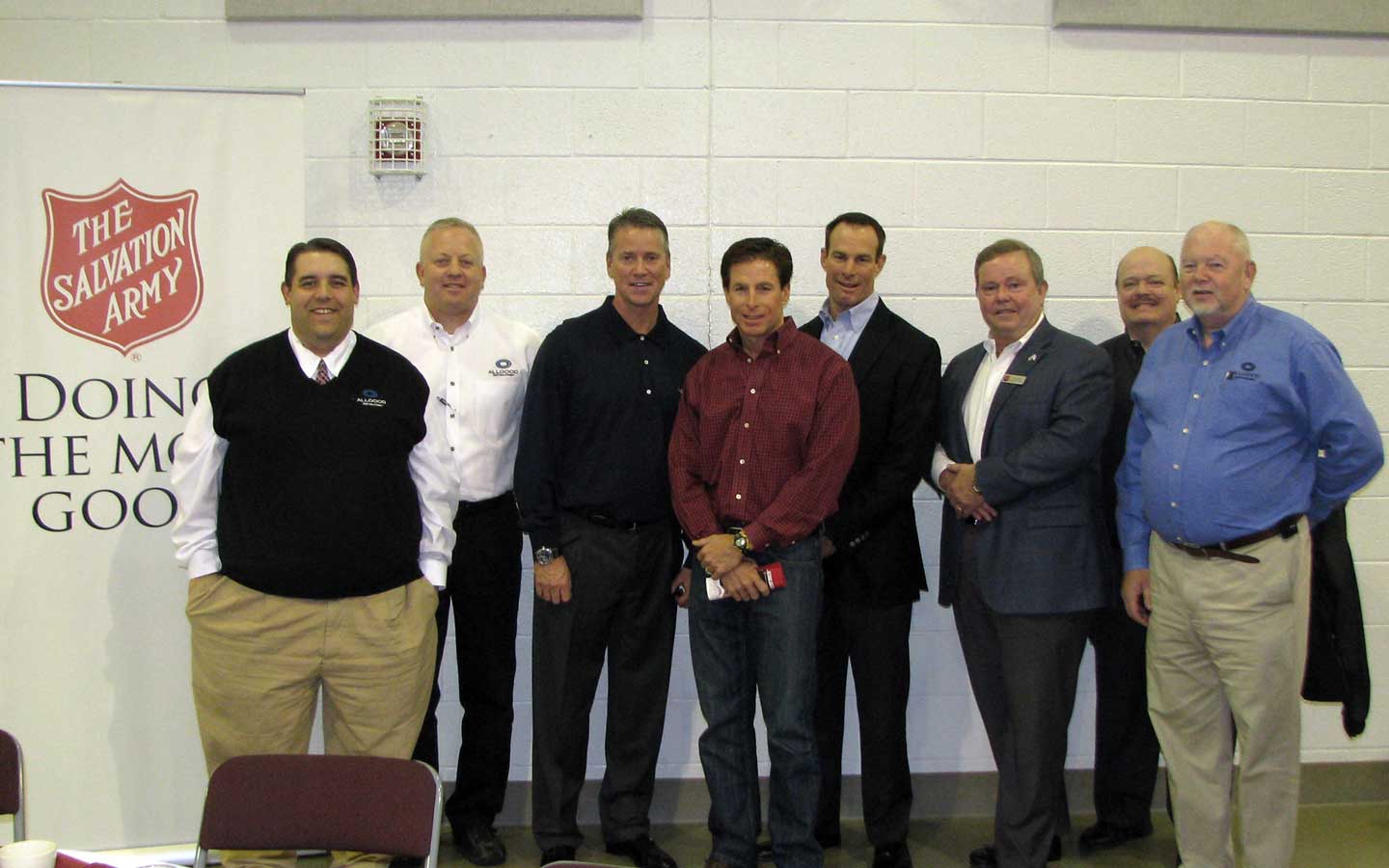

Mrs. Robin Pope singing a special musical number "They Need Christ"

Keynote speaker Tom Glavine was also on hand.

Monday, October 25, 2010
THE HOUSE MOUSE

The house mouse has a pointed muzzle, small eyes and prominent ears. Its feet are short and broad. The tail is uniformly dark and semi-naked. Droppings of the house mouse are about 1/8 – ¼ inch long, rod shaped and have pointed ends. They can be distinguished from cockroach droppings because they lack the ridges which are prominent in cockroach droppings.
The house mouse is a prolific breeder. It can reach sexual maturity in 35 days.
Pregnancy lasts about 19 days. The young are blind and naked, except for vibrissae (long whiskers). They are weaned in about 3-4 weeks. Life expectancy is normally less than 1 year. The size of an average litter is 6 young, with the potential for about 8 litters per year. A female can have a litter about every 40-50 days. More than 1 litter may be present in the nest at the same time. Each female will average 30-35 weaned per year.
Mice have excellent senses, except for sight. They are color blind and can see clearly for only about 6 inches. They are excellent climbers and can run up walls which have rough surfaces. They are able to swim, but seldom do. They are able to jump about 12 inches high and can jump down about 8 feet without injury. They can survive in temperatures as low as 14F. They can run horizontally along pipes, ropes and wires.
A house mouse needs about 1/10 ounce of dry food per day and about 1/20 ounce of water (which is normally taken from the food source). It will produce about 50 droppings per day. Over a six month period, one pair of mice will eat about 4 pounds of food, produce about 18,000 droppings and excrete about 12 ounces of urine. The most common way they transmit disease is by contaminating food with their droppings and urine.
Mice are very social. Related males and females are compatible, but unrelated males are typically aggressive. They maintain a territory with the boundaries marked by urine. Territory size varies, but is usually very small. If food and water are plentiful, they may never venture more than 4-5 feet from their nests. Seldom will they travel more than 15 feet away. Mice are very inquisitive. They are likely to explore new things very quickly.
The house mouse is a nibbler. It eats only a small amount of food at any one time or place. They will eat many kinds of food, but prefer seeds. They feed mainly at dusk and just before dawn, but will nibble frequently in between. They sample new foods, but will return to old sources unless the new food is preferred. Required moisture is obtained from their food, but they will take free water when available, with a preference for sweetened water over plain water.
The house mouse prefers a nesting site that is dark, where there is abundant nesting material nearby and where there is little chance of disturbance. Nesting materials include paper products, cotton, packing materials, insulation, fabrics, etc. They will nest in almost any concealed space, such as walls, cabinets, furniture or stored products. They require an opening of ¼ inch to gain entry and are nocturnal in habit.
Friday, October 8, 2010
Salvation Army Breakfast with Tom Glavine

Allgood Pest Solutions is sponsoring the 4th annual Salvation Army's Doing the Most Good Prayer Breakfast with special guest speaker, retired Atlanta Braves pitcher, Tom Glavine. The proceeds for this event benefit the Salvation Army Home Sweet Home Gwinnett Program. The Breakfast will take place Friday October 29, 2010 8:00 am-9:15 am at the Salvation Army Lawrenceville Corps, 3455 Sugarloaf parkway, Lawrenceville, Ga 30044. Ticket prices are $125 per person and tables of eight are $1,000 each. Please call 404-444-1334 or visit www.salvationarmyatlanta.org for table and event sponsor pricing.
Monday, October 4, 2010
Allgood Pest Solutions at the Norcross Arts Festival
Allgood Pest Solutions at the Norcross Arts Festival


 |
| Allgood Pest Solutions at the Norcross Arts Festival this past weekend, it was great to see so many friendly faces come by our booth. |
Tuesday, September 28, 2010
Allgood Pest Solutions Participates in 2nd Annual Korean Festival
The Korean community has made a tremendous impact on the Metro Atlanta community with their energy and passion. Now, the Korean community wants to express their appreciation and respect toward their fellow Americans and the community in a very unique way.
The Korean community would like to invite all of their friends to the 2nd Annual Korean Festival celebrating the traditional Korean version of Thanksgiving, called "Choosuk."
Allgood Pest Solutions was on hand to join in on the celebration.


Allgood Pest Solutions Supports Local YMCA
 |
Allgood Pest Solutions was on hand last weekend helping out at the YMCA Partner with Youth 5k Race held at the Avenues At Webb Ginn in Lawrenceville. For more information on how to help this cause click here. YMCA
 |
| Mike Tindol, of Allgood Pest Solutions providing encouragement to runners in the YMCA 5k Run |
 |
| Keith, Kat, Kendra, & Mike from Allgood Pest Solutions |
 |
| and they're off |
 |
| Now here's encouragement for you! |
 |
| Mike giving out high five's to runners in the race. |
 |
| Nothing like having a mascot on hand to keep spirits up. |
Monday, September 27, 2010
Scott Slade's new testimonial about Allgood Pest Solutions. Scott Slade has had Allgood Pest Solutions serving his home for over 10 years now. Check out more about termite and pest control by Allgood Pest Solutions and any information you may need on bed bugs here.
Subscribe to:
Posts (Atom)


